
our history
Tobruk is a port city on the Mediterranean coast, within Libya and near the country’s eastern border with Egypt.
The town had been an Italian military post since 1911. During World War II, the Australian 6th Division, supported by other Allied forces, captured Tobruk on 22 January 1941. A pennant flag is displayed in our clubhouse, liberated from Tobruk’s town hall that day.
The Australian 9th Division reached Tobruk on 9 April 1941. An Axis attack from the west was repelled on 10 April. Then, on 11 April, the Siege of Tobruk began when German forces cut the supply road to its east, encircling the garrison. After 231 days, the siege was finally defeated by Allied forces on 27 November 1941.
In 1944, veterans of Tobruk who had returned to Australia founded Tobruk House.
Since then, Tobruk House has continuously supported veterans and their families, remembered our fallen, and commemorated Australia’s military service. Tobruk House has been a nexus between veterans and our wider civilian community, nurturing the important connections between veterans, their families, and the civilian community. These bonds and mutual support are significant to the fabric of Australian society.
Today, Tobruk House is an incorporated charity that continues the good work and legacy started by our founding members in 1944.
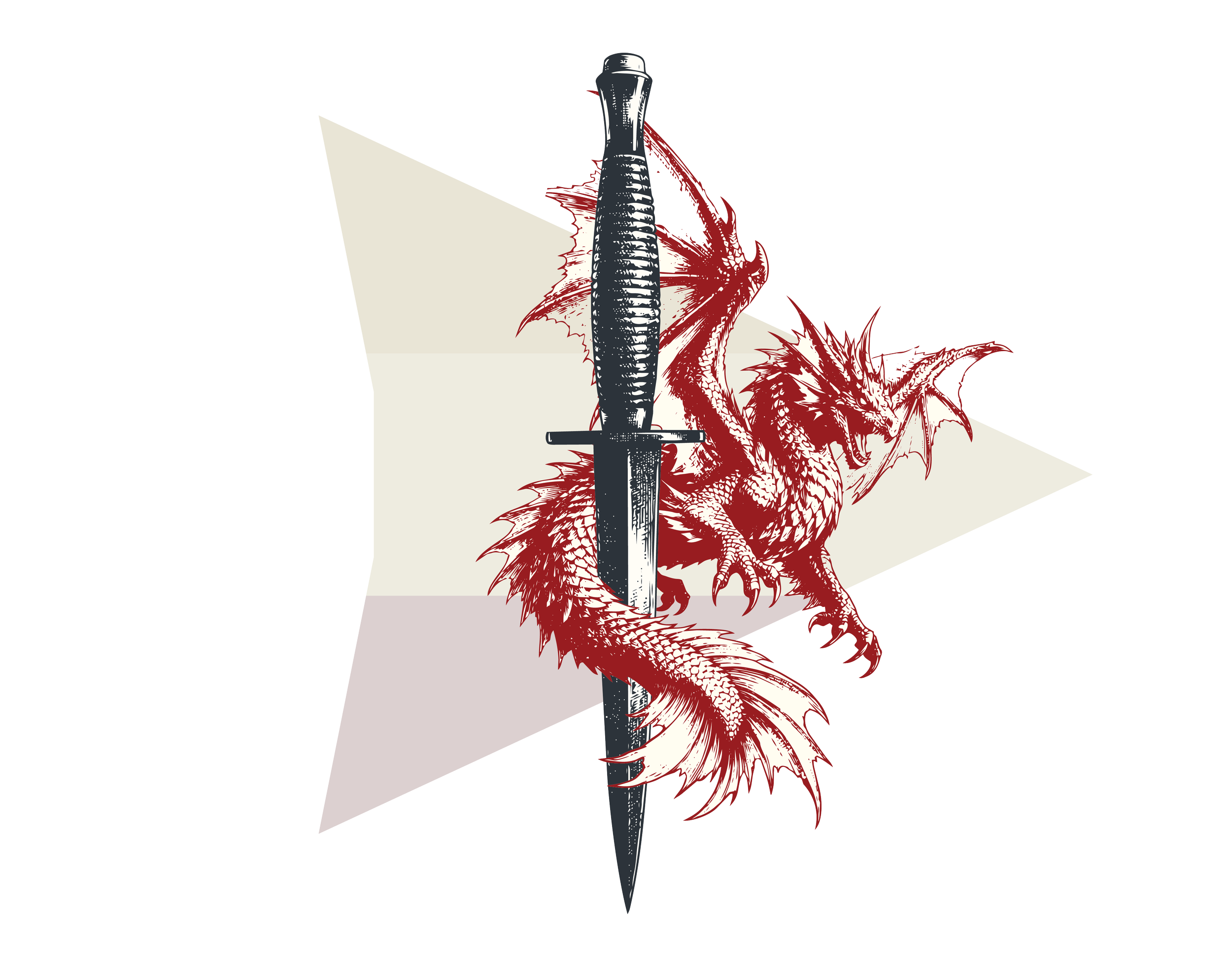
our emblem
Tobruk House’s emblem comprises three elements.
The background depicts the pennant flag that was liberated from Tobruk’s town hall by Australian soldiers on 22 January 1941. This flag remains in the care of Tobruk House to this day. It represents our genesis and continuity.
In the foreground is the wyvern, a formidable creature capable of striking without warning from land, sea, or air. The wyvern reflects the joint-service status of our veterans.
Central to the emblem is the Australian Army Stiletto, a storied dagger that holds special significance to our members and volunteers.